Porcelain Dental Crowns Los Angeles CA: What You Should Know

Porcelain crowns occupy a very practical middle ground in dentistry. They are not flashy, and they are not usually the treatment patients arrive asking detailed questions about. More often, someone sits down in the chair because a tooth cracked, an old filling failed, a root canal left a back tooth fragile, or a front tooth no longer looks right. Then the conversation turns to crowns, materials, cost, longevity, and whether porcelain is the right call.
If you are researching Dental Crowns Los Angeles CA, porcelain is one of the materials you will hear about most often, and for good reason. It can restore strength, shape, and appearance in a way that looks natural under everyday light. But not every porcelain crown is the same, not every tooth needs the same approach, and not every patient is a good candidate for the most esthetic option. Those distinctions matter.
The best treatment decisions usually come from matching the crown material to the job the tooth actually has to do. A front tooth that shows when you smile has very different demands than a heavily loaded molar in someone who clenches at night. That is where a lot of the real judgment comes in.
What a porcelain crown actually does
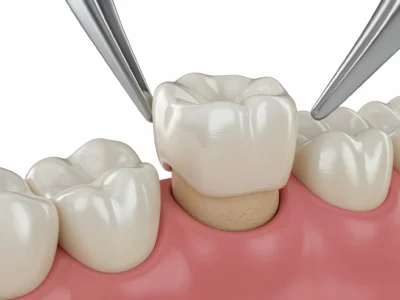
A dental crown covers and protects a damaged or weakened tooth. Think of it as a custom shell made to fit over the prepared tooth structure. Once bonded or cemented into place, it restores the tooth’s contour, helps you chew comfortably, and protects what remains underneath.
With porcelain crowns, there is an additional benefit: appearance. Good porcelain mimics the way natural enamel reflects light. A well-made crown does not look like a flat white cap. It has depth, surface texture, subtle translucency, and color variation that blends with neighboring teeth. That is especially important in visible areas, but many patients now want that same natural look farther back in the mouth too.
Porcelain crowns can also help solve more than one problem at once. A tooth with a large broken filling may need structural support, but if it is also discolored or misshapen, the crown can address that at the same time. This is part of why crowns remain such a common restorative treatment. They are not only about repairing damage. They can also reestablish function and improve the smile in a durable way.
Why people in Los Angeles ask specifically for porcelain
Los Angeles patients often arrive with a high level of awareness about cosmetic dentistry. They have looked at photos, compared options online, and noticed the difference between restorations that disappear into a smile and restorations that announce themselves. In that setting, porcelain earns attention because it can deliver a very natural result when handled well.
There is also a practical side to the local demand. Many adults in Los Angeles have older dentistry that was done years ago, including large silver fillings, metal based crowns, or bonding that has stained over time. Replacing those restorations with porcelain can modernize the look of the smile without changing the character of the face or the teeth. The best work does not make someone look like a different person. It makes them look like themselves, only healthier and more polished.
At the same time, appearance should not overshadow function. A porcelain crown that looks beautiful but fractures under heavy bite forces is not a successful outcome. That is why good planning matters so much. The material has to suit the bite, the amount of remaining tooth, and the habits of the patient.
Not all porcelain crowns are the same
One of the most common points of confusion is that “porcelain crown” is a broad label. Patients often use it to mean any tooth-colored crown, but dentists and labs may be talking about several different materials within that category.
Some porcelain crowns are layered by hand for lifelike esthetics, often used in the front where matching color and translucency is critical. Others are made from stronger ceramic materials such as zirconia or lithium disilicate, which can offer a favorable balance of strength and appearance. The ideal choice depends on location, bite pressure, available space, and cosmetic goals.
A front central incisor, for example, often benefits from a material that allows a ceramist to create natural brightness without making the tooth look opaque. A lower molar for a patient who grinds may call for a stronger ceramic with slightly different esthetic priorities. Neither choice is universally better. The question is what works for that tooth in that mouth.
This is also why two crown cases can have very different fee ranges even in the same city. Material choice, laboratory quality, digital design, temporary fabrication, and complexity of color matching all influence the final treatment cost.
When a porcelain crown makes sense
A crown is usually recommended when a tooth cannot predictably hold a filling alone. That may happen because the tooth has cracked, the cavity is extensive, an old restoration has undermined too much enamel, or root canal therapy has made the tooth more brittle. Sometimes the issue is wear. Patients who have spent years clenching or grinding can flatten and weaken teeth enough that a crown becomes part of rebuilding the bite.
Porcelain also makes sense when esthetics matter. A severely discolored tooth, a misshapen tooth, or a tooth with a large visible restoration may be a good candidate if the underlying structure is strong enough to support a crown.
There are, however, cases where a crown is not the first option. If the problem can be fixed conservatively with bonding, an onlay, or a veneer, many dentists prefer to preserve more natural tooth structure. Crowns are excellent restorations, but they do require reshaping the tooth. A careful dentist does not place one casually.
What the process usually looks like
For most patients, getting a porcelain crown takes two visits, though some offices offer same-day crowns for selected cases. The first appointment is the preparation visit. The dentist examines the tooth, removes decay or old restorative material if needed, reshapes the tooth so the crown can fit properly, and takes a detailed impression or digital scan. A temporary crown is then placed while the final crown is made.
That temporary stage is more important than many people realize. A well-made temporary protects the tooth, keeps it from shifting, and gives both patient and dentist a preview of contour and bite. If something feels bulky, catches floss, or affects speech, that information can guide the final restoration.
At the second visit, the temporary is removed and the permanent crown is tried in. The dentist checks fit, contacts, bite, and appearance before bonding or cementing it in place. Sometimes only minor adjustments are needed. Occasionally, especially with highly visible front teeth, a color or contour refinement may be worth sending back to the lab rather than settling for a result that is merely acceptable.
Same-day crowns can be a good option for straightforward cases, particularly on posterior teeth. They save time and eliminate the temporary phase. Still, they are not automatically the best choice for every situation. Highly esthetic front tooth cases often benefit from a skilled dental laboratory and a ceramist’s custom finishing work.
How much tooth has to be removed
Patients often ask whether a crown means “shaving the tooth down to a peg.” Sometimes they have seen dramatic images online and assume that every crown requires that level of reduction. In reality, preparation design depends on the material used and the condition of Dental Crowns Los Angeles CA the tooth.
Porcelain crowns need enough space for the ceramic to have proper thickness and strength. If too little space is created, the crown can end up overcontoured or weak. If too much tooth is removed unnecessarily, the tooth loses healthy structure. The right preparation strikes a balance.
This is one reason experience matters. Conservative preparation is not simply about removing less. It is about removing the right amount in the right places while preserving margin integrity, retention, and esthetics.
The esthetic side, where porcelain can shine or fail
Porcelain crowns can look excellent, but esthetics is where quality differences become obvious. Shade matching is not just selecting “white” from a tab. Natural teeth have layers of color. The neck of the tooth near the gum is often warmer. The incisal edge can be more translucent. Surface texture changes how light reflects. Even the neighboring teeth may not be perfectly symmetrical.
A crown that is too opaque can look chalky. One that is too translucent may appear gray in certain light. A crown with the wrong shape can make a smile look off even if the color is technically close. Front teeth are especially unforgiving because people notice them during speech, not only in a still photo.
This is where photographs, digital shade analysis, and communication with the lab become valuable. In more demanding cases, a custom shade appointment with the ceramist can make a real difference. Patients sometimes think cosmetic success rests entirely on the material, but the artistry of design and finishing often matters just as much.
Strength, longevity, and the reality of wear
A porcelain crown is durable, but it is not indestructible. In a healthy mouth with good hygiene and a stable bite, many crowns last well over a decade. Some last much longer. Others fail sooner because of recurrent decay around the edges, fracture, cement failure, gum changes, or heavy grinding.
Night grinding is one of the biggest variables. It is not unusual for a patient to have beautiful ceramic work placed and then crack it because no one addressed the clenching habit. A custom night guard can be a very wise investment after crown treatment, especially if there is existing wear on natural teeth or a history of broken restorations.
Porcelain also interacts with opposing teeth. A properly polished ceramic surface is generally kinder to the opposing enamel than a rough one. That means finishing quality and follow-up adjustments matter. A crown that feels “a little high” should not be ignored. Small bite discrepancies can translate into a lot of force over time.
Cost in Los Angeles, and why prices vary
Fees for Dental Crowns Los Angeles CA can vary widely. That is not only a matter of neighborhood or branding. The cost can reflect material choice, lab quality, the complexity of the case, whether build-up or root canal treatment is needed, and how much time is spent on esthetic planning.
A straightforward posterior crown in a healthy mouth is a different case from replacing a visible front tooth crown with difficult shade matching and gum asymmetry. Patients sometimes compare quotes as if they are shopping for identical products, but crowns are custom restorations tied to diagnosis, technique, and laboratory standards.
Insurance can help, but benefits are often limited. Many plans cover crowns when they are deemed medically necessary, yet annual maximums may only pay a portion of the fee. It is worth asking for a pre-treatment estimate, but it is also worth understanding that the least expensive crown is not always the least expensive choice over time. Remakes, fractures, open margins, and esthetic dissatisfaction can become costly in their own right.
Questions worth asking before you commit
When patients want to make a sound decision, a few targeted questions usually reveal more than a long sales pitch. If you are considering porcelain crowns, ask:
- Why is a crown recommended instead of a filling, onlay, or veneer?
- What ceramic material is being used for this tooth, and why?
- Will the crown be made in-office or by an outside lab?
- How will you check the bite and color before final cementation?
- Do you recommend a night guard if I clench or grind?
Those questions do not need to be asked in a confrontational way. A good dentist should be able to answer them clearly and without defensiveness. The goal is not to quiz the office. It is to understand the reasoning behind the treatment.
The role of the dentist, and the role of the lab
Patients often assume the crown they receive is entirely the dentist’s work. In reality, high quality crowns are usually a collaboration. The dentist prepares the tooth, captures accurate records, manages the bite, and sets the clinical plan. The lab or ceramist fabricates the restoration based on those records. If either side is weak, the result can suffer.
A very skilled ceramist cannot fix a poor preparation or inaccurate scan. Likewise, a beautifully prepared case can still disappoint if the crown is fabricated with mediocre contour or color control. In complex esthetic cases, the strongest outcomes often come from offices that communicate closely with trusted labs rather than treating crown fabrication as a commodity service.
Gum health matters more than most people expect
Even a perfectly made crown will not look or last right if the surrounding gums are inflamed. Crowns meet the tooth at a margin, and that margin must be cleanable and biologically respectful. If the edge is rough, overbulked, or positioned poorly, plaque tends to collect. That can lead to bleeding, tenderness, bad taste, and eventually decay or recession.
This matters especially for visible teeth. Receding gums can expose the edge of a crown and make a previously good restoration look older. Sometimes patients blame the porcelain when the issue is actually the gum architecture or oral hygiene.
For that reason, dentists often want periodontal health stabilized before moving into definitive crown work. It may feel like a delay, but it usually improves the long-term result.
Temporary sensitivity, bite changes, and other normal concerns
It is common to have mild sensitivity after a crown preparation, especially to cold or pressure. A temporary crown can feel slightly different from a natural tooth, and the area may be tender for a few days if the gums were manipulated during the procedure. That does not automatically mean something is wrong.
What deserves attention is pain that intensifies, sensitivity that lingers sharply, or a bite that feels clearly uneven after the final crown is placed. Patients are sometimes reluctant to return for a “small adjustment,” but those visits matter. A two-minute correction of a high contact can prevent weeks of discomfort or long-term stress on the tooth.
Speech changes can also happen briefly with front teeth, particularly if the contour behind the tooth is different from what the tongue is used to. Most people adapt quickly, but if a crown consistently affects pronunciation, it is worth mentioning.
When porcelain may not be the best answer
Porcelain is versatile, but there are cases where another material or treatment plan may be smarter. Someone with extremely heavy bruxism may need a stronger posterior material selection and careful risk counseling. A tooth with very little remaining structure may require a build-up or even extraction and replacement if prognosis is poor. A patient with high esthetic demands but minimal damage might be better served with a more conservative option than a full crown.
There are also cosmetic cases where expectations need to be recalibrated. Replacing one front crown can be more challenging than doing several because matching a single tooth to neighboring natural teeth is often harder than creating harmony across multiple restorations. Sometimes the best Dental Crowns Los Angeles CA esthetic outcome requires a broader plan than the patient initially expected.
Choosing a provider in Los Angeles
Los Angeles offers no shortage of dental offices, and that can make the decision harder rather than easier. A polished website is not the same thing as a polished crown. Patients usually do best when they look beyond general marketing and pay attention to details like before-and-after cases, how clearly the dentist explains material choices, whether the office discusses bite and grinding risk, and whether esthetic cases involve quality lab support.
It also helps to notice how the office handles the planning conversation. If every cracked tooth is immediately framed as a cosmetic upgrade opportunity, caution is reasonable. Good treatment planning feels measured. It explains benefits, limitations, alternatives, and the likely lifespan of the work.
For many people searching Dental Crowns Los Angeles CA, the right provider is the one who combines restorative judgment with cosmetic restraint. That combination is less common than advertising might suggest, and it is worth taking time to find.
What patients are happiest they knew beforehand
The patients who tend to feel best about their crown treatment are usually the ones who understood three things early. First, porcelain crowns are custom restorations, not interchangeable products. Second, the quality of fit, bite, and design matters at least as much as the word “porcelain.” Third, maintenance after placement matters. Good brushing, flossing, regular cleanings, and protection from grinding all influence how long a crown serves you.
A porcelain crown can be a very satisfying restoration. It can make a damaged tooth functional again, let you smile without thinking about a dark or broken tooth, and hold up well for years. But like most dentistry, the success lies in the details. The material is only part of the story. The diagnosis, preparation, bite management, lab work, and follow-through are what turn a crown from a simple fix into a lasting result.
Simple Dental Vermont
Address: 8914 S Vermont Ave, Los Angeles, CA 90044
Phone number: +13239493000
FAQ About Dental Crowns Los Angeles CA
How much do crowns cost per tooth?
In the United States, a single dental crown typically costs between $800 and $2,500 per tooth without insurance. The ultimate out-of-pocket price depends heavily on the crown material, the location of the tooth, and whether you have dental insurance coverage.
What is the downside of crowns on teeth?
The primary downside of a dental crown is that the procedure permanently removes natural tooth enamel to shape the tooth for the cap.
Why do dentists push for crowns?
Dentists recommend crowns because a large filling cannot provide enough strength when a tooth loses a major portion of its structure or faces heavy chewing pressure.
Ends · MESSIAHNBBT749